







The challenge
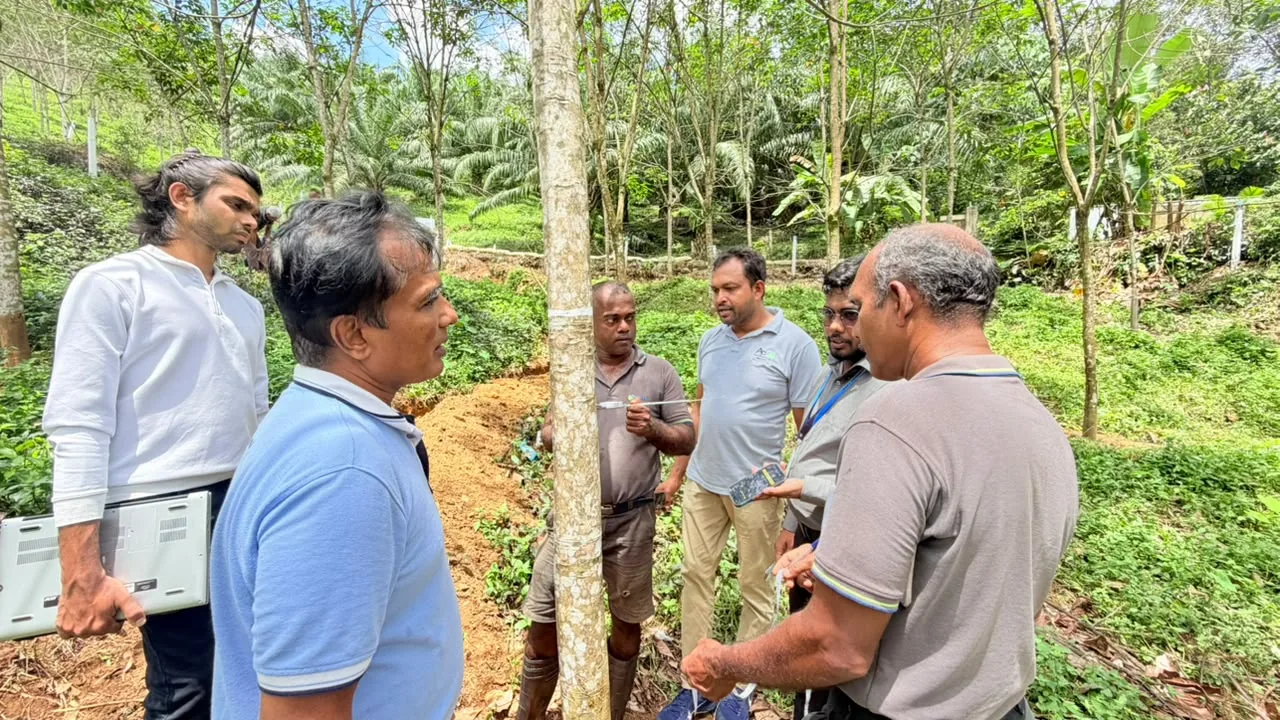
Measuring young rubber trees by hand and copying numbers into paper logbooks takes a lot of labour, drives up cost, and leads to counting and typing mistakes. There was no history for individual trees, so slow-growing trees and clusters were hard to find in time.
The solution
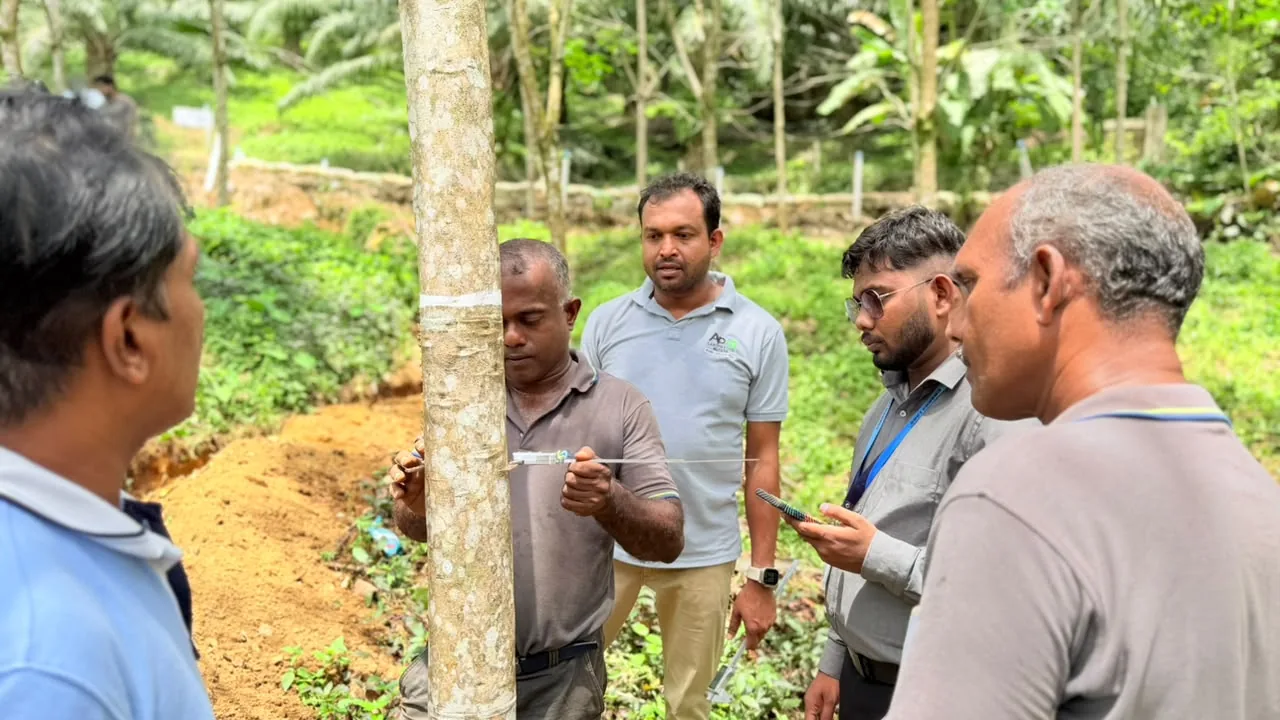
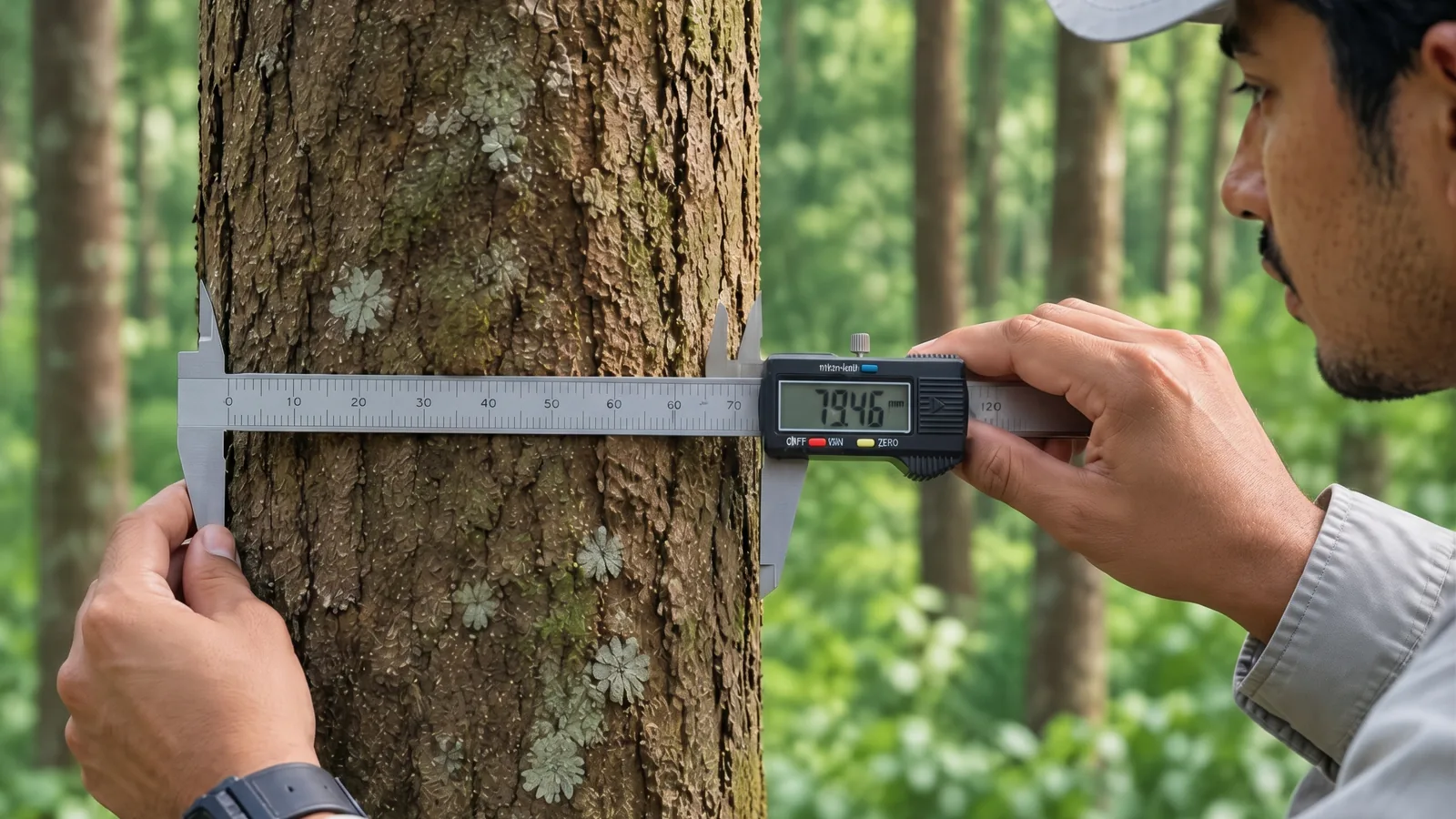
- Bluetooth calipers send the trunk diameter straight to the web-based app on the phone, which works out the girth. No typing, no paper.
- Every reading is stamped with GPS position, time and operator, so each tree can be traced.
- Works in remote estates without internet and syncs when a signal is found.
- Web dashboard shows girth distribution by estate, division and field, with satellite maps to find slow-growing trees.
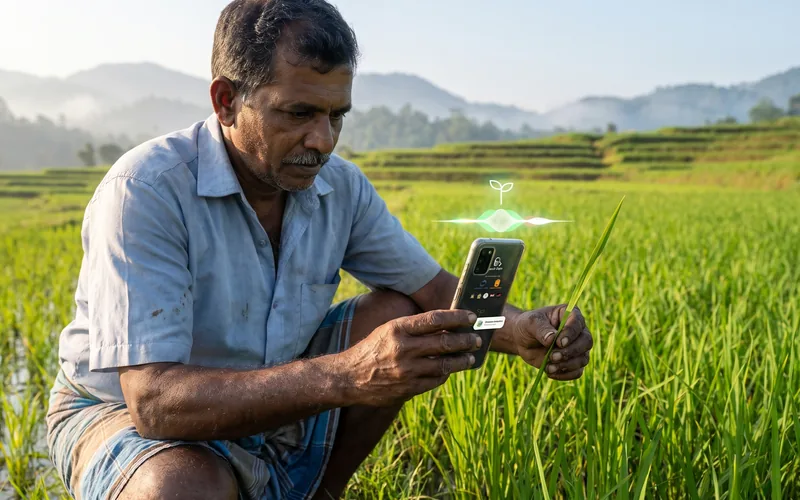
- Photos of canopy and trunk can be uploaded, and AI analysis supports early detection of diseases such as Pestalotiopsis leaf fall disease.
- Full audit trail of every edit. All data stays in the plantation company’s own database or dedicated cloud.
The result
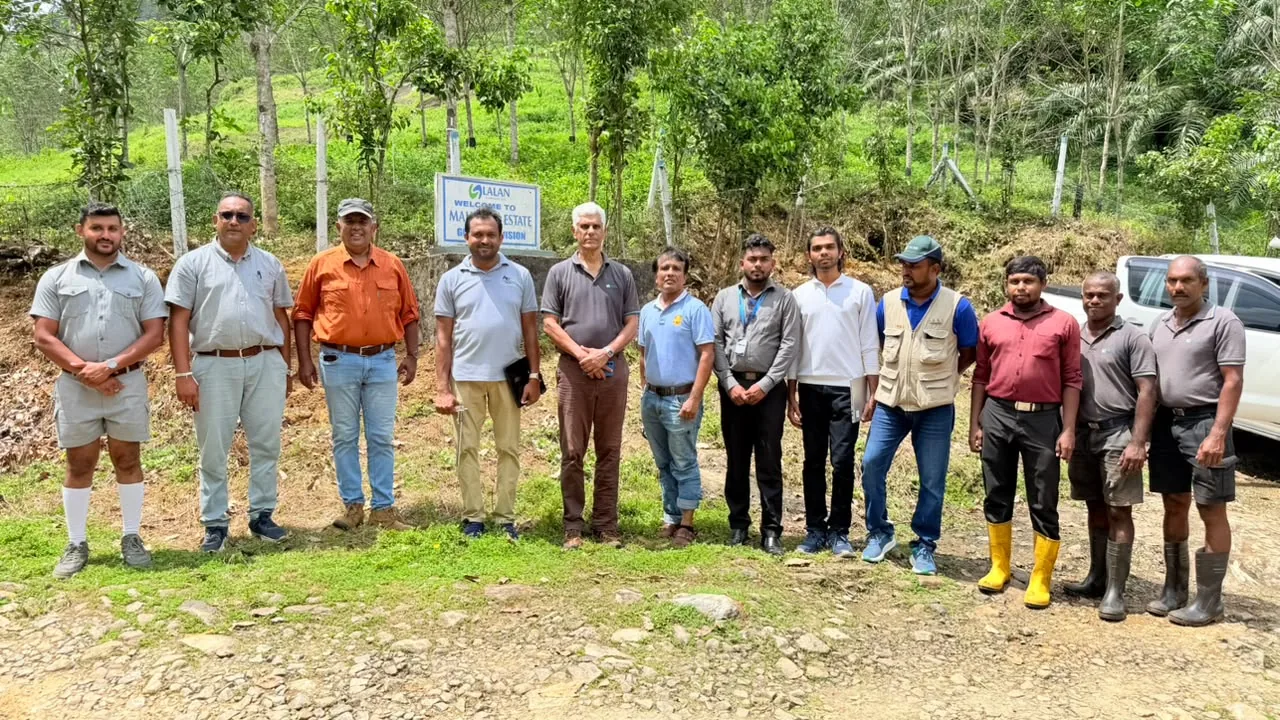
Field-tested with Agalawatte Plantations PLC. The system cuts girth-census cost by about 65% compared with manual methods, saving around LKR 5,830 per hectare per year on the census alone. Reports that took weeks are now live on the dashboard, and managers can judge staff performance on data. Continuous growth monitoring helps the estate reach its tappable stand within 6 years.