







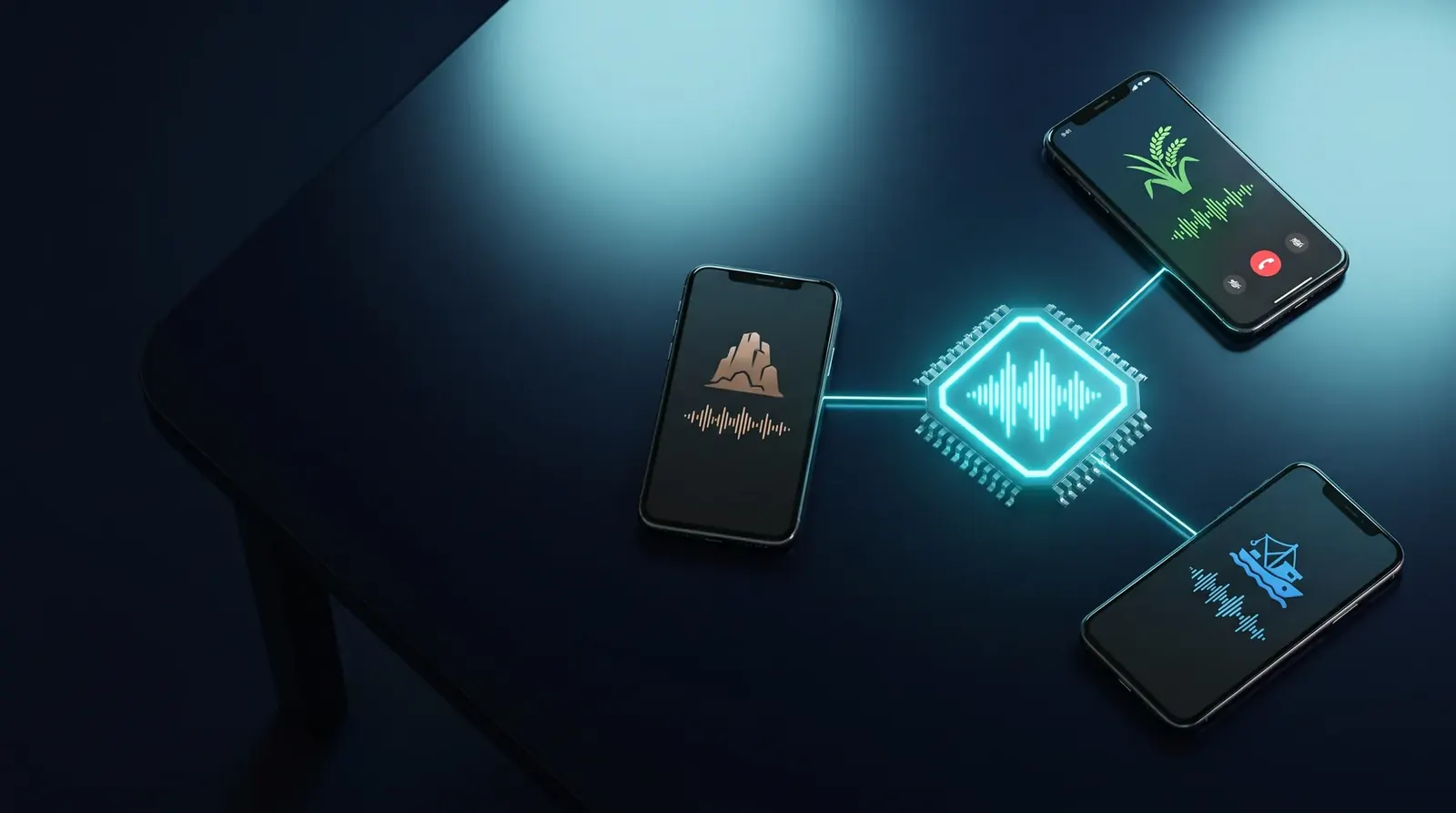
Farmers, fishers and travellers call three very different hotlines, yet all three run on the same Chakra Conversational AI engine. Here is how that works, and the rules that keep every answer honest.
A farmer asking about leaf spots on his chilli plants, a fisherman checking the sea before he sets out, and a tourist looking for help near Sigiriya have very little in common. Yet when they call Govimithuru, Sayuru AI or Travel Sri Lanka, they are all talking to the same engine: Chakra Conversational AI.
This post explains how that works, and why it lets us build a new hotline in weeks instead of months.
Every hotline has the same hard parts
Answering a phone call, hearing the caller, speaking back naturally, remembering someone who called last week, searching a knowledge base, recording what happened and reporting on it: every voice hotline needs all of these, and each is hard to get right.
So we built them once, in the engine. A hotline is then only what is special about it.
What a hotline is made of
- Settings: the languages, the greeting, how long to wait in silence, and which tools are switched on.
- Words and rules: the assistant’s personality, its guardrails and its conversation flows, all kept as plain configuration, never hard-coded.
- A knowledge base: the documents the assistant answers from. The client uploads and rebuilds it through an admin portal, without a developer.
- Skills: small pieces of logic for that field, such as marine weather and fish prices for Sayuru AI, crop advice and market prices for Govimithuru, and nearby help and issue reports for Travel Sri Lanka.
Because everything the assistant says or decides lives in configuration, a new hotline needs very little new code.
One agent per language
Callers speak Sinhala, Tamil or English, so each language has its own agent that greets and replies only in that language. This avoids a common failure of voice assistants: drifting into the wrong language halfway through a call.
The rules every hotline follows
- Never invent. Prices, dates, fees and reference numbers come only from a tool or the knowledge base.
- A reference number only after saving. A caller gets a reference code only once the record is really stored.
- Honest about gaps. If the assistant does not know, it says so and records a callback. Missed questions are logged, so the knowledge base keeps improving.
- Safety first. In an emergency it gives safety guidance first and the right number, slowly and clearly.
- Consent once. Where a hotline uses location or text messages, it asks permission at most once.
Why it matters
The hard parts already work in the field, so a new hotline comes together quickly: Travel Sri Lanka went from first build to accepted testing in about a month. And every hotline gets the same reliability, reporting and safety from day one.
Want one for your organisation?
The engine is available to other organisations. Book a free call and we will show you how it could work for you.
All posts